Big Leaf Maple
Big Leaf Maple is a magnificent native tree of coastal British Columbia and the Pacific Northwest, known for its broad canopy, towering height, and signature hand-shaped leaves. The leaves can grow to over 30 cm across, turning a rich golden yellow in autumn. In spring, its dangling clusters of pale green flowers feed native pollinators, while the bark and branches provide shelter for countless organisms. A keystone species in coastal ecosystems, it also offers value as a shade tree and produces sap that can be tapped for maple syrup.
Where Can You Grow Big Leaf Maple?
This species prefers moist, well-drained soils and full to partial sun. It thrives in woodland edges, riparian zones, and larger garden landscapes in Zones 5-9. Once established, it is drought tolerant and low maintenance.
History and Historical Uses
Used for millennia by First Nations along the West Coast, the Big Leaf Maple provided wood for paddles, tools, and carvings, while the inner bark was sometimes woven into ropes. Today it remains important ecologically and is increasingly tapped for artisanal maple syrup production in coastal climates.
Canadian Zone Information
Zones 8-9: Direct sow in autumn or cold stratify and plant in spring for consistent germination.
Zones 5-7: Stratify seeds in moist sand in the fridge for 60-90 days before planting outdoors in spring.
Zones 3-4: Can be grown in containers and transplanted after 1–2 years; protect young saplings from deep freeze.

How to Grow and Harvest Big Leaf Maple
Planting: Sow seeds outdoors in fall or stratify indoors and transplant in spring.
Watering: Water deeply in the first year to establish roots.
Harvesting: Not typically harvested as a crop; sap collection possible in late winter.
Maintenance: Mulch around young trees; prune to shape and remove damaged limbs as needed.
Seed Saving Tips for Future Supply
Collect Seeds: Gather winged samaras in autumn once they fall naturally.
Dry and Clean: Air dry seeds; remove from wings if storing.
Store: Keep in cool, dark, and dry conditions.
Viability: Seeds retain viability for up to 2 years with proper storage.
Certified Organic By
Islands Organics Producers Association (Cert#1962)
Original: $3.49
-70%$3.49
$1.05
Description
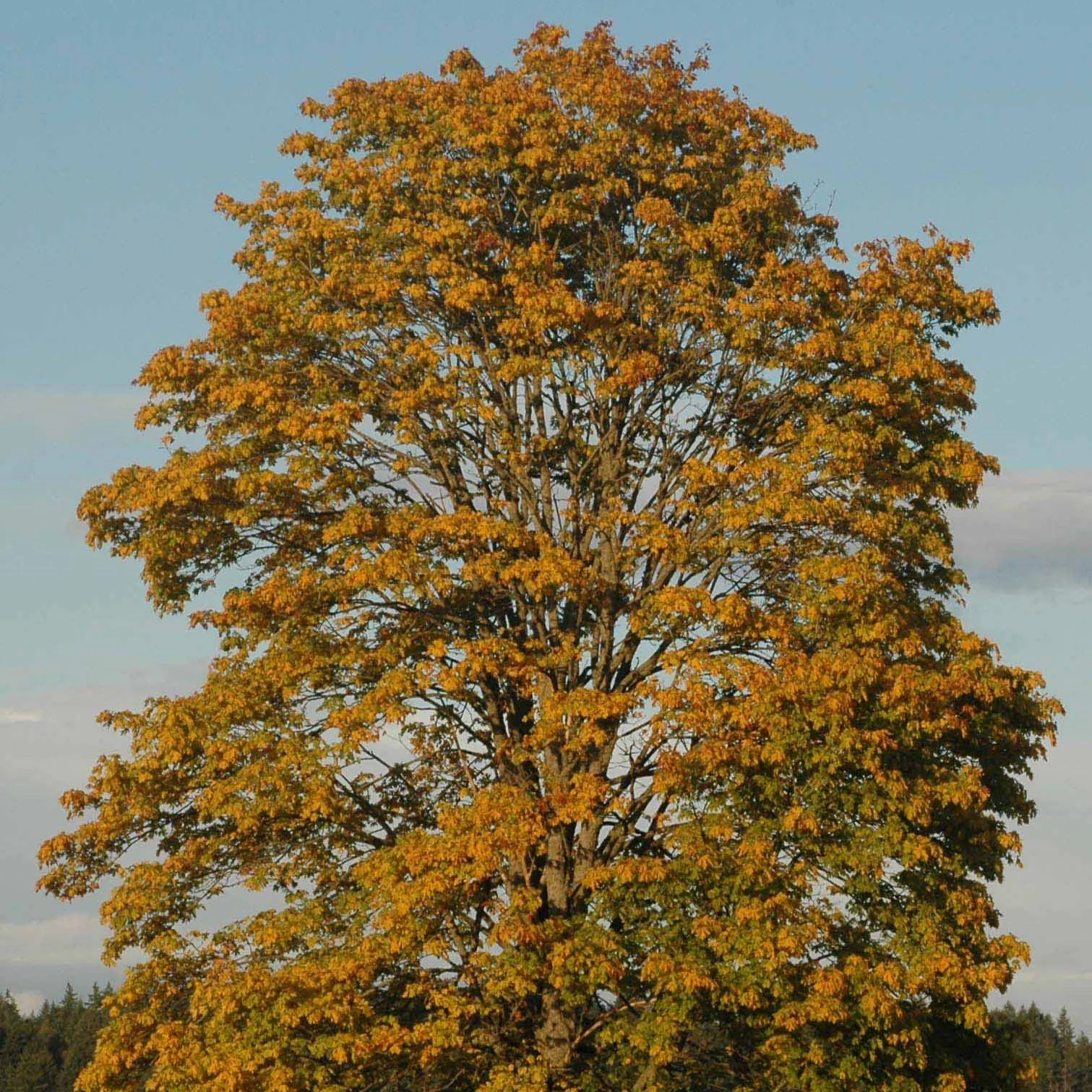
Big Leaf Maple is a magnificent native tree of coastal British Columbia and the Pacific Northwest, known for its broad canopy, towering height, and signature hand-shaped leaves. The leaves can grow to over 30 cm across, turning a rich golden yellow in autumn. In spring, its dangling clusters of pale green flowers feed native pollinators, while the bark and branches provide shelter for countless organisms. A keystone species in coastal ecosystems, it also offers value as a shade tree and produces sap that can be tapped for maple syrup.
Where Can You Grow Big Leaf Maple?
This species prefers moist, well-drained soils and full to partial sun. It thrives in woodland edges, riparian zones, and larger garden landscapes in Zones 5-9. Once established, it is drought tolerant and low maintenance.
History and Historical Uses
Used for millennia by First Nations along the West Coast, the Big Leaf Maple provided wood for paddles, tools, and carvings, while the inner bark was sometimes woven into ropes. Today it remains important ecologically and is increasingly tapped for artisanal maple syrup production in coastal climates.
Canadian Zone Information
Zones 8-9: Direct sow in autumn or cold stratify and plant in spring for consistent germination.
Zones 5-7: Stratify seeds in moist sand in the fridge for 60-90 days before planting outdoors in spring.
Zones 3-4: Can be grown in containers and transplanted after 1–2 years; protect young saplings from deep freeze.
How to Grow and Harvest Big Leaf Maple
Planting: Sow seeds outdoors in fall or stratify indoors and transplant in spring.
Watering: Water deeply in the first year to establish roots.
Harvesting: Not typically harvested as a crop; sap collection possible in late winter.
Maintenance: Mulch around young trees; prune to shape and remove damaged limbs as needed.
Seed Saving Tips for Future Supply
Collect Seeds: Gather winged samaras in autumn once they fall naturally.
Dry and Clean: Air dry seeds; remove from wings if storing.
Store: Keep in cool, dark, and dry conditions.
Viability: Seeds retain viability for up to 2 years with proper storage.
Certified Organic By
Islands Organics Producers Association (Cert#1962)